
.png)
“Having Placer provide us with the top zip codes to target made a big difference for us in our digital marketing strategy. Instead of advertising to an oversized radius, we can be more targeted with our ads. At 186% lift in curbside orders the numbers speak for themselves.”
~ Nicole Kraus, Digital Marketing
The Challenge
A Campaign to build awareness and use of new curbside grocery pickup option
Like any grocer, Tony’s Fresh Market engages their local customers through regular print and digital advertising. Historically, these campaigns were done with a ring radius, sending invites to any and all people within a set distance of the store. And, like all good marketers in charge of those campaigns, Nicole Krause, Digital Marketing Associate for Tony’s Fresh Market, is focused on quantifying the results of those campaigns, proving reach and overall ROI.
Nicole found an ideal opportunity to test the effectiveness of her marketing efforts - a recent push announcing their newer curbside pickup option at a select number of stores, which Tony’s had recently undertaken to combat the poor winter weather and to familiarize people with their stores. She explains: “At the time these ads ran, our newest store (that also offered curbside pickup) had their grand opening in July 2021 as a new store. These campaigns were their first go around with ads focused on building awareness and driving curbside pickup."
Having started Placer onboarding during the first two months of the campaign, the first campaign was done using the traditional ring radius method and with no insights from Placer, while the final two months were done using Placer identified zip codes that Nicole could target.
The Solution
Using Placer data to target ad campaigns by zip code instead of by ring radius
While a ring radius is the traditional method for advertising, it’s a blunt tool that fails to account for any knowledge of customers or the existing trade area. Nicole explained it this way: "...we were using a mile radius for the most part, which was not always the most accurate. You could still make use of them, but the zip code factor is actually a lot better for us, especially if we see an area that we want to target specifically…With the zip code we can change the wording within the ad so the ad is specific to the town, and we can include that with the store location and have Facebook generate a map as well, which we can’t get with ring radius.”
To generate that list of zip codes, Nicole relied on Placer’s true trade area to visualize all areas customers came from. Unlike a ring radius that only focuses on distance from the location, the true trade area constructs the trade area for a store based on the actual home or work locations of its customers, showing the true reach of a store using robust and quantifiable data. This same true trade area powered Placer’s TOP ZIP CODES report, which Nicole used to learn which zip codes had the highest customer capture rates, and may thus be open to curbside pickup. The report gave her detailed insights into each zip code and how much traffic it contributes, as shown on the next page for one of her stores.
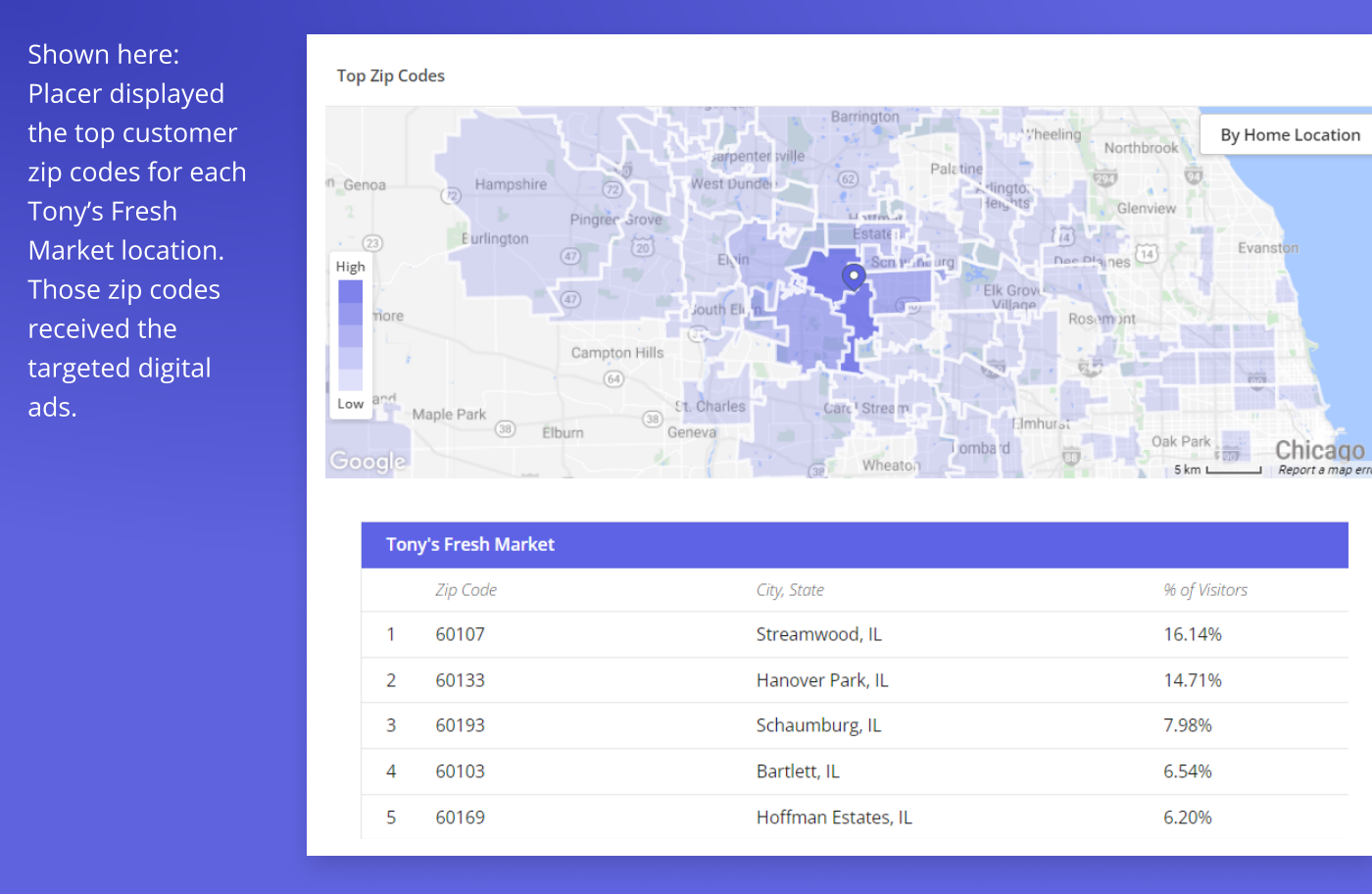
Learn more about Visits by Origin
Nicole ran this report for each property with curbside pickup, then turned to Facebook and Instagram for her digital ads.
Using short-visits and tracking specific parking spots to track only curbside pickup
Armed with the zip codes to target, and with the ads prepped for Facebook and Instagram, Nicole and her customer success manager at Placer, Ray, then worked to configure tracking in Placer.
The challenge? Find a way to differentiate store traffic from curb-side pickup. Luckily, Placer and Nicole were up to the challenge. To get the granularity they were looking for, Nicole and Ray did two things:
1. They did a separate geo-fence around only 4 parking spots, which were the ones designated for curbside pickup
2. They screened specifically for “short visits,” or visits anywhere from 2 to 15 minutes, helping remove shoppers that may have parked in those places inadvertently and gone inside to shop.
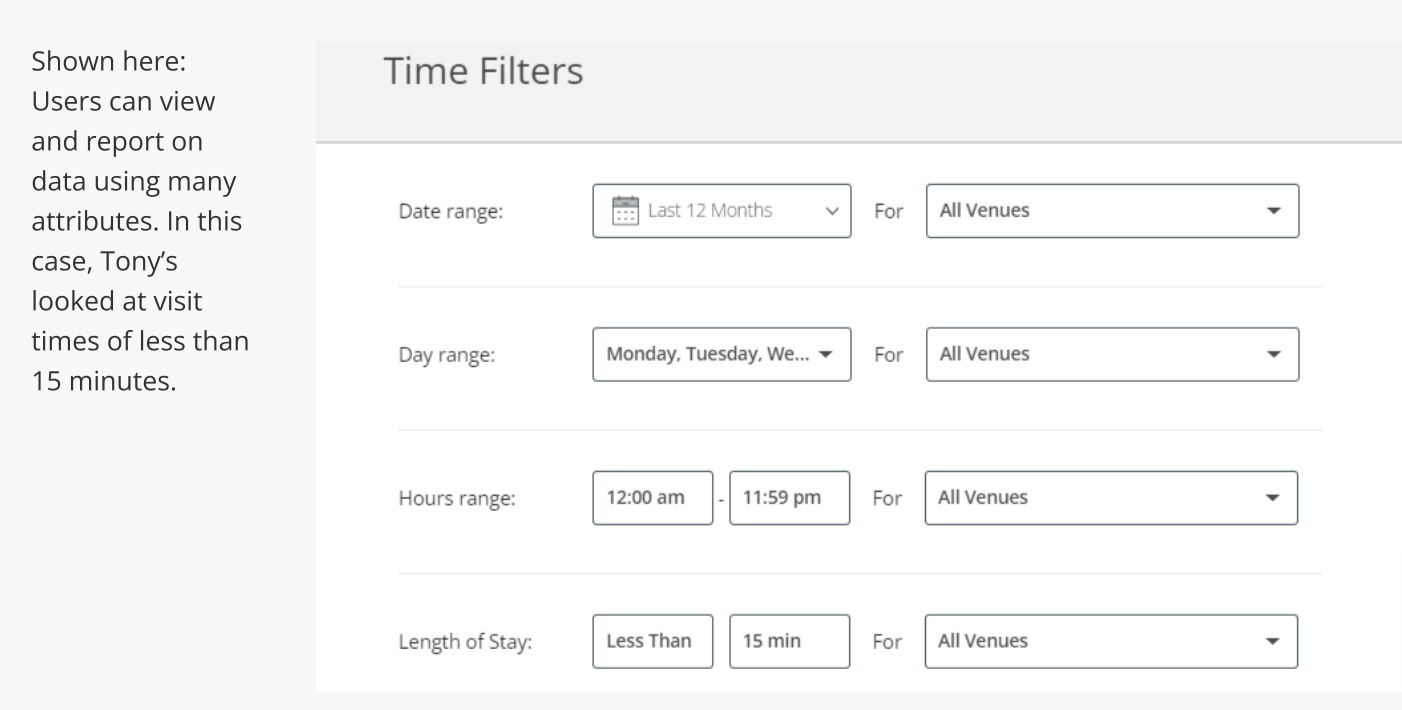
Learn more about Filters
The Outcome
The results were powerful and clearly in favor of zip code targeting.
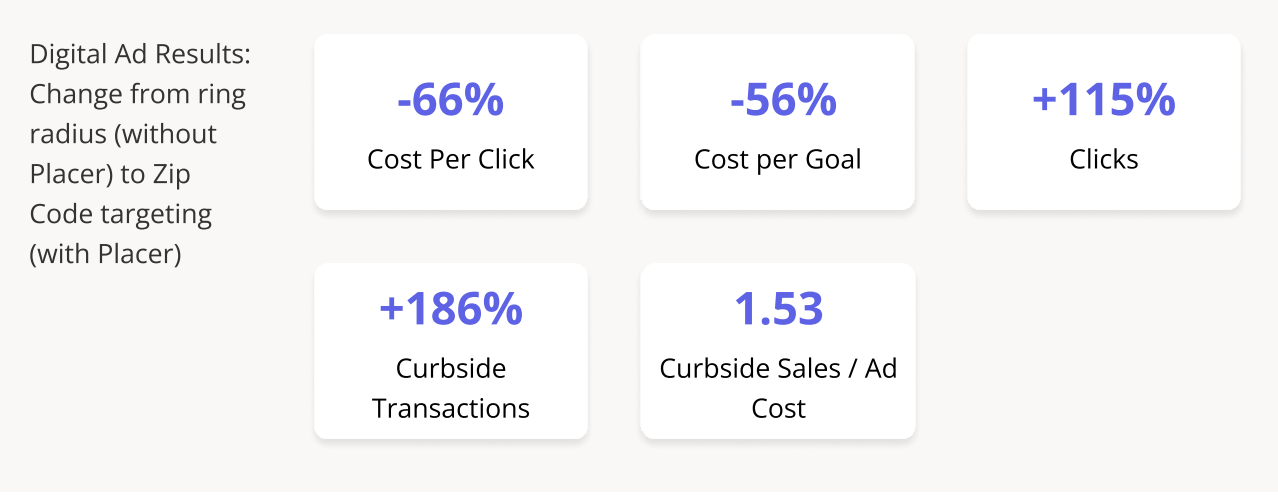
With nothing else changing across both campaigns, other than targeting, CPC and CPA (cost per action, where the action is an online order) fell more than 50% with zip code targeting, while the number of curbside orders using zip code targeting vs. ring radius increased 186% over 8 weeks. In terms of overall return on investment like this, Nicole mentioned that topline sales growth was 1.5 times the cost of the campaign for Facebook and Instagram.
Indeed, the results were strong across all metrics Nicole tracked, below:
Due to the effectiveness she’s seen thus far, it’s obvious that zip code targeting will continue to be the default for Nicole and team to target ads.
